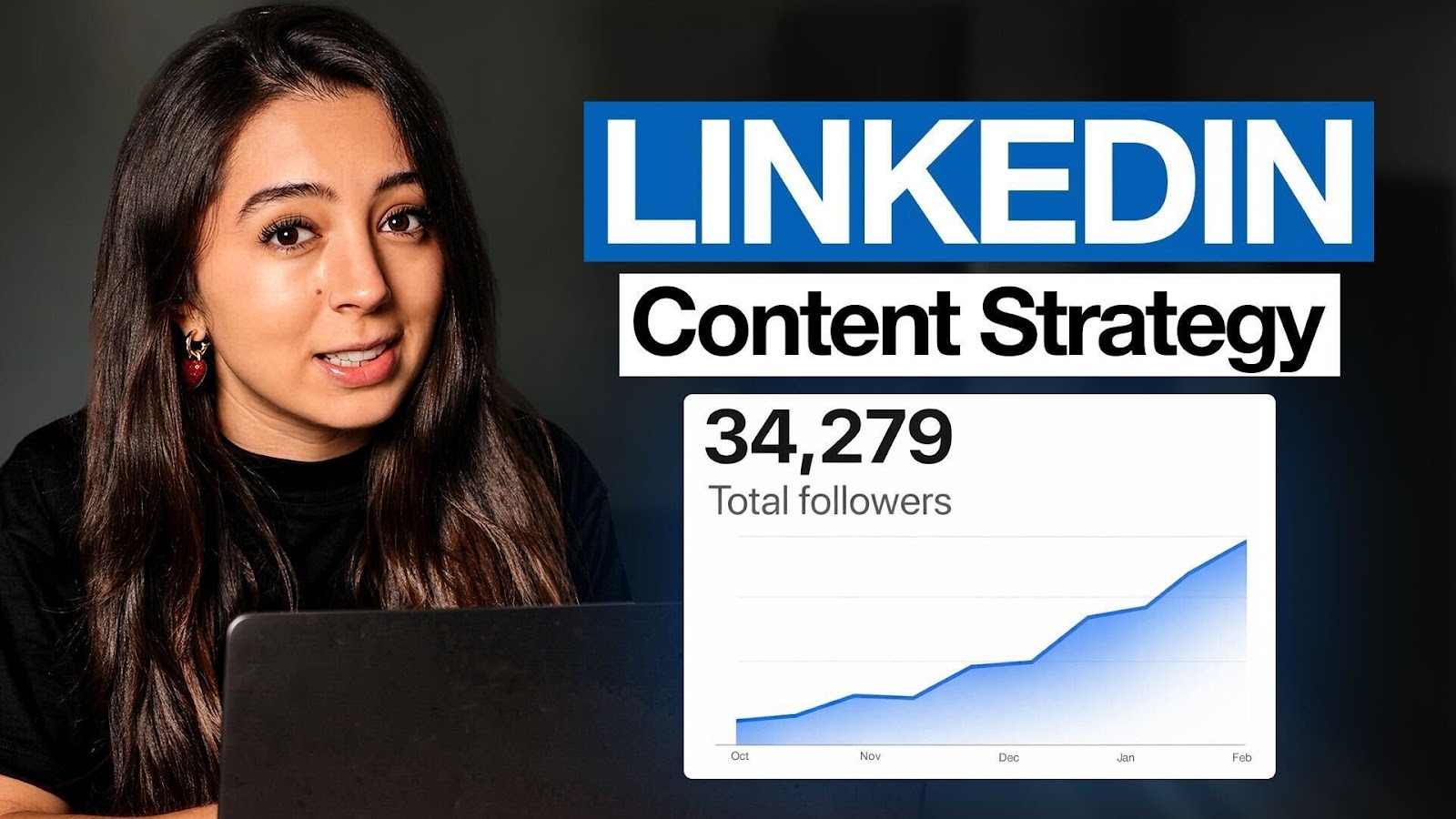
Most people treat LinkedIn content strategy as “what should I post today?” They open a blank text box, try to think of something smart, post it, and repeat. That’s not a strategy. That’s just hoping something sticks.
I built a six-figure agency, got invited to speak at conferences internationally, and generated close to a million dollars in revenue – all from LinkedIn, all organic. The system behind that isn’t complicated, but it does require you to think about content differently. This is that system.
Why most LinkedIn content strategies fail
Before getting into the framework, it’s worth understanding what breaks most approaches. There are three mistakes I see constantly across the founders, CMOs, and executives I work with at Distinctiva.
They’re chasing the wrong metric
A post that hits 100K impressions sounds impressive. But I’ve had posts hit 5,000 impressions that generated more qualified leads than posts that hit 100K. Reach without relevance is worthless. If the people seeing your content will never buy from you, never refer you, and will never become valuable connections, the numbers don’t matter.
I know creators with double my following who don’t make a single dollar from LinkedIn. Volume of attention isn’t the goal. Attention from the right people is.
They’re posting without a funnel
Most people post whatever comes to mind. Monday it’s a hot take, Tuesday it’s a case study, Wednesday it’s a personal story. There’s no logic connecting any of it. Your content needs to do different jobs – some posts bring new people in, some build trust, some convert. Doing only one of those things means you’re leaving pipeline on the table.
They have no infrastructure
People think content strategy is about the posts. It’s not. It’s about the system that produces them. Without infrastructure, you start from zero every time you sit down to write. You rely on motivation instead of process, which is exactly why most people burn out after three weeks.
The four-bucket content funnel
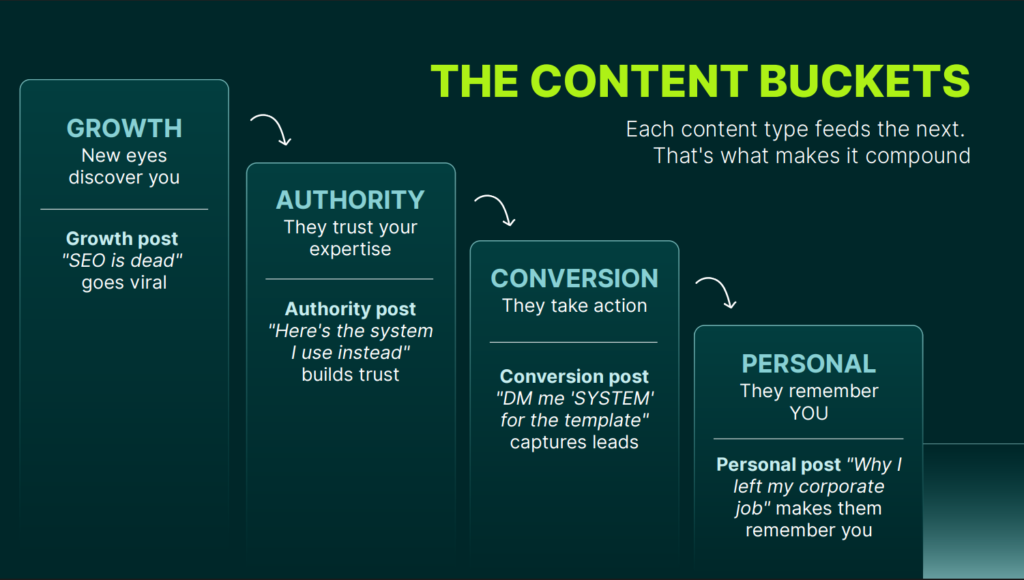
Every piece of content you create should belong to one of four buckets. Each one does a specific job in moving someone from “never heard of you” to client.
Growth content (about 35%)
This is content designed to reach new people. Industry observations, trend commentary, pattern recognition, hot takes that make someone stop scrolling. Growth content is broad by design – you’re not trying to convert anyone here, you’re trying to get discovered.
Examples: commentary on what you’re seeing across clients, challenging conventional wisdom in your space, observations about where your industry is heading. The goal is simple: someone who’s never heard of you sees this post and thinks, “who is this person?”
Authority content (about 35%)
This is where you prove you actually know what you’re talking about. Frameworks, case studies, deep expertise, client results. Authority content is the difference between someone thinking “this person has interesting opinions” and “this person can actually help me.”
It attracts a narrower audience than growth content. That’s the point. You want the right people paying attention, not everyone.
Conversion content (about 20%)
This is content that asks for the business. Lead magnets, direct offers, CTAs that move people from engaged followers to actual conversations. Most people are scared of conversion content because they think it’ll feel salesy. If you’ve built trust through growth and authority posts first, conversion content feels like a natural next step, not a pitch.
Conversion content only works if the other buckets have done their job. You can’t convert people who don’t trust you yet.
Personal content (about 10%)
This is where you show the human behind the expertise. Your story, your perspective, behind the scenes of what you’re building. Personal content deepens connection with people who already follow you – it’s what makes them remember you specifically, not just your advice.
One thing worth saying directly: personal content is not “what my dog taught me about B2B sales.” It’s real updates that your community cares about because they’re invested in your journey. And it only works once you’ve built that community. Earn the right to share personal content by providing value first.
These ratios aren’t rigid. Some weeks you’ll lean heavier on one bucket. But zoom out over a month and you want all four represented. More importantly: your voice and point of view should come through in all of them. The buckets are about intent, not style. A growth post and an authority post can both tell a story or educate. The difference is what job they’re doing in your funnel.
The infrastructure that makes it sustainable
The best content strategy fails if you can’t execute it consistently. These are the three infrastructure pieces I set up for every client at Distinctiva – and use myself.
A content bank
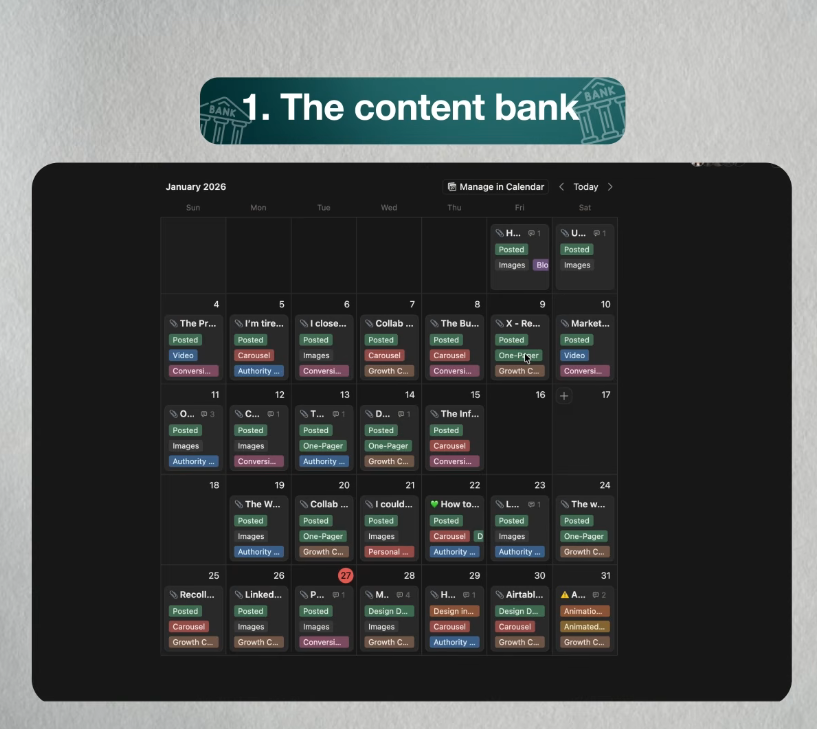
This is where everything lives. I run a Kanban board in Notion. Every piece of content starts as a card and moves through the pipeline: Ideas, In Progress, Ready to Pass to Design, Design in Progress, Design Done, Needs Edits, Posted.
Right now I have over 150 raw ideas sitting in the Ideas column. Half-formed thoughts, a hook that came to me mid-conversation, a framework I explained on a client call, a topic I want to tackle eventually. Nothing polished. Just captured.
Every card is tagged by format – carousel, one-pager, video, text post – so I can filter by type instantly. The content bank solves the biggest problem people have: sitting down to write with no idea what to write. When you have 450 ideas waiting, you’re never starting from zero. You’re just deciding what to work on next.
Google Drive as a source library
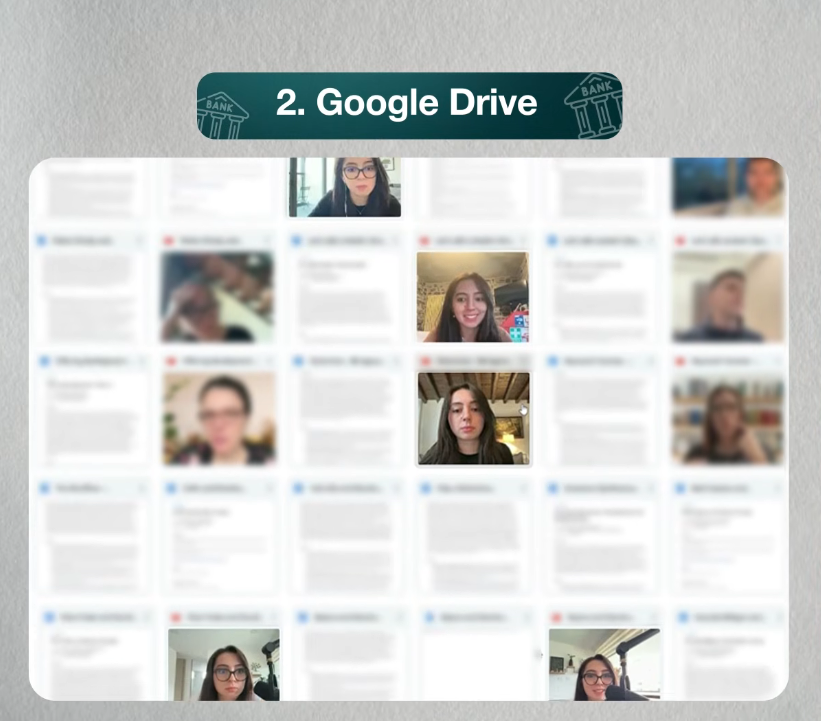
This is where I keep all source material: meeting transcripts, SOPs, conference presentations, client onboarding docs, strategy decks. The reason this matters is that Drive is connected to Claude.
When I need to create content, I’m not staring at a blank page trying to think of something smart to say. I can pull up a transcript from a client call and say “turn this objection handling into a post.” Or grab a conference presentation and extract three LinkedIn carousels from it. The content already exists – it’s buried in calls you’ve already had, presentations you’ve already given, documents you’ve already written. Drive makes it accessible. The Claude connection makes it usable.
That’s the difference between creating content and extracting content. One is exhausting. The other is a system.
A well-built Claude project
I recommend Claude over other LLMs for LinkedIn content specifically. But a generic Claude conversation isn’t the same as a well-configured Claude project. The setup matters.
Your project instructions should include:
- Claude’s role in this specific project (ghostwriter, not just “an assistant”)
- Your identity: who you are, what you do, who you help, your origin story
- Your opinions and spicy takes – the contrarian beliefs and things you hate in your industry
- Your writing rules, including banned words (leverage, unlock, game-changer, dive deep – none of that)
- Formatting rules: no em dashes, short paragraphs, conversational tone, contractions always
Then your knowledge base: your best LinkedIn posts so it understands your writing style, call transcripts, case studies, frameworks you use, and examples of posts you hate so Claude knows what to avoid. The more context it has, the better the output.
I put together a full walkthrough of exactly how I set this up – every section, every file, the prompts that actually work – in a free Loom video. You can grab it here.
How to actually write posts that perform
Even with the best infrastructure, you still need a writing process. This is the five-step process I follow and teach.
Step 1: Choose your intent
Before writing anything, decide which bucket this post belongs to. Is it growth, authority, conversion, or personal? This decision shapes everything else – the hook, the structure, the CTA.
Step 2: Write the body first
Most people start with the hook. That’s backwards. Write the actual content first. Get the ideas down, include the specifics – numbers, frameworks, examples. Once you have the body, finding the hook becomes much easier.
Step 3: Mine the body for your hook
Read through what you wrote and find the most interesting, surprising, or provocative line. Move it to the top. The best hooks almost always already exist in your content – you just have to find them.
A strong hook does one of three things: creates curiosity, challenges a belief, or promises specific value. If your first line doesn’t do any of those, keep looking.
Step 4: Add a visual if it helps
Not every post needs an image. But if a visual makes your point clearer, makes the post more scannable, or adds credibility – include one. Framework diagrams, screenshots, before-and-after data, photos of you speaking or working. These all add dimension.
One thing worth noting: unpolished formats are outperforming heavily designed carousels right now. Screenshots, text-only posts, simple graphics. The “whip up any carousel and it blows up” era is over. Design is still useful, but it’s not the shortcut it used to be.
Step 5: Match your CTA to your intent
- Growth posts: ask a question that sparks discussion
- Authority posts: “DM me for the template” or “comment X for the full framework”
- Conversion posts: “link in bio” or “DM me to work together”
- Personal posts: often no CTA needed – just connection
A few formatting basics that matter: keep paragraphs to two or three lines max on mobile, use white space, write at a seventh or eighth grade reading level. Read the post out loud before you publish. If you wouldn’t say it in conversation, rewrite it.
The engagement layer most people skip
Content gets you seen. Engagement builds relationships. And when you’re starting out, your comments matter more than your posts.
When you post to a small audience, few people see it. When you comment on a post with 50,000 impressions, you’re borrowing someone else’s audience. Strategic commenting means finding posts from people whose audience matches your ICP, leaving comments that actually add something – an insight, a story, a respectful challenge – and doing it consistently. Fifteen to thirty minutes a day.
One practical tip: build a simple engagement list. A spreadsheet with columns for category, name, and LinkedIn URL works fine. The important thing on the URL is to add the link to their recent activity, not their profile page. Go to their profile, click “show all posts,” and use that URL. Otherwise they’ll see you viewing their profile every day, which reads as strange.
And don’t forget to engage on your own posts. Reply to every comment. Ask follow-up questions. Keep the conversation going. The algorithm rewards active engagement, and it’s how you build real relationships with the people paying attention to you.
Before you build anything, do this research first
This is the step most people skip entirely and then wonder why nothing works. Before you build a content strategy, you need to understand who the key players are in your space on LinkedIn. Stalk your favorite creators. Find the posts that did well for them, understand their outliers, figure out whether your ICP is mostly lurking or actively posting.
If you’re building a content strategy and a positioning document without doing any benchmark research first, you’re starting in a rough patch. The research isn’t optional.
You also need three assets before you start posting consistently:
- An executive summary document – not a 49-page deck you’ll never use again. A working document with your role, primary goal, content strategy goal, success metric, your ICP’s challenge, and your solution.
- Content north stars – the guiding principles that every piece of content must align with. These keep you from going in ten different directions and confusing your audience. At Distinctiva, we typically build out around ten north stars per client.
- A tone and format guide – so that whatever tool you’re writing with (again, Claude) understands your specific writing style. The more organized your source material is, the better.
Putting it together
The complete system comes down to four things working together: a content funnel with four buckets doing four different jobs, infrastructure that keeps you from starting from zero every time, a writing process that produces posts people actually want to read, and an engagement layer that builds real relationships with the right people.
None of this is complicated. But it requires consistency, and the compound effect only kicks in if you stick with it. Commit to ninety days minimum. Your first twenty posts are practice. Posts twenty-one through forty are where you find your voice. Posts forty-one and beyond are where momentum starts building.
If you want this built for you – if you’re a founder or executive who wants to become the recognizable voice in your industry without spending your own time figuring out the system – that’s exactly what we do at Distinctiva. Drop me a message on LinkedIn or book a call here. We’ll figure out what your content is missing.