I got fired at 23. By 25, I’d built a content agency that’s done close to a million dollars, all from one platform, all from inbound, zero cold outreach. And the strategy behind it? I stole it.
Not plagiarized. Not copied and pasted. Stolen the right way. Austin Kleon called it “steal like an artist” and it’s the most honest description of how every good content creator actually works. In a recent YouTube video, I broke down the full system I used – and still use at Distinctiva today – to go from zero to a recognized LinkedIn personal brand that drives consistent pipeline.
This post covers the core framework. But if you want the full breakdown, the examples, and the exact workflow we run for clients, watch the video here.
What “stealing” actually means in content strategy
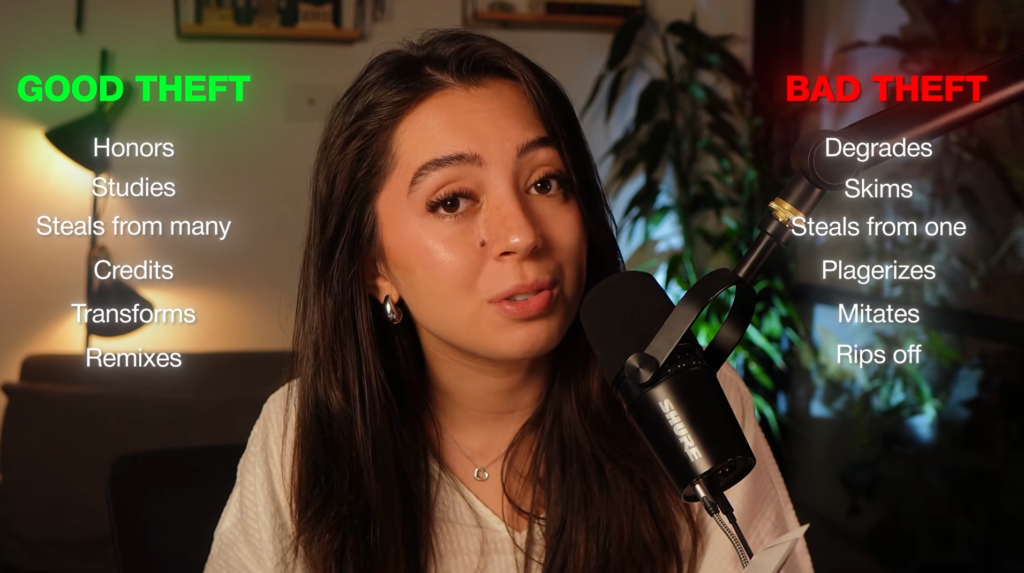
Most people hear “steal” and think copying. That’s not it. There’s a difference between a good theft and a bad one.
A good theft studies, honors, credits, transforms, and remixes. A bad theft imitates, skims, plagiarizes, and rips off. The goal is to become a collector, not a hoarder. Hoarders collect indiscriminately. Collectors are selective about what they pick up and why.
When I started on LinkedIn, I spent months studying creators who’d figured it out before me. Not to copy their posts word for word, but to understand the thinking behind what they were doing. Why did this format work? What made that hook land? What was the underlying structure behind a post that got 500 comments?
Once you understand the why, you can apply it to your own experience, your own clients, your own observations. That’s when it stops being theft and starts being original work.
Where the real content material lives
Six months into posting, something shifted for me. I stopped trying to replicate what was already working and started noticing what was missing. Everyone was posting the same stuff – “here are five tips for your LinkedIn profile,” “how I got 10,000 followers,” generic advice dressed up in different formatting.
But I’d spent months inside a real agency, watching founders and CMOs run into the same problems over and over. I had access to something most LinkedIn creators didn’t: the messy, specific reality of what actually happens when you’re doing B2B content at scale.
So I started writing the posts I wanted to read. Posts about what it actually takes to extract thought leadership from a busy executive. Posts about the difference between a content creator and a content system. Posts about why most thought leaders have never tested their ideas against real buyers.
That shift – from “what’s working on LinkedIn” to “what do I know that other people don’t” – is where your LinkedIn content strategy gets a real point of view.
The three places where your best content already exists
Before I ever posted on LinkedIn, I worked at an SEO agency. The two founders had built something real – seven figures, actual clients, a system that worked. And I had access to everything: SOPs, client onboarding docs, sales scripts, Loom recordings where they explained their frameworks to new hires.
I became a collector. And what I collected came from three places:
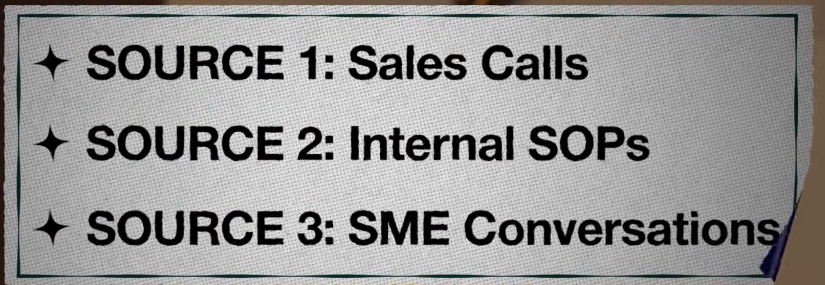
- Sales conversations. Every objection is a post. Every question a prospect asks is a hook. When a founder says “we’ve been doing SEO for months and can’t figure out why we’re not ranking,” that’s not just sales intel. That’s content.
- Internal documentation. The how-to docs, the onboarding flows, the audit templates. Don’t just read them. Study the thinking behind them. Why is it structured this way? What decision does this information help make? When you understand the why, you can explain it. When you can explain it, you have content.
- Expert interviews. The senior people in any organization know things the founders don’t even remember they know. Stuff that’s become automatic. Ask them: “why do you do it that way?” or “what’s the mistake you see clients make most often?” Nine times out of ten, they’ll say something brilliant they’d never think to post about because to them, it’s obvious. That’s the material. The obvious expertise that’s invisible to the person who has it.
This is the raw material. Everything else – format, hook, visual – is packaging.
The content system we run at Distinctiva
This isn’t just something I used to build my own brand. It’s the exact workflow we run for clients today. One of our clients, an SEO agency, went from $800K to $3.6M ARR with 90% of their pipeline coming from LinkedIn, built entirely on this system.
Four steps:
1. Record everything. We have clients record their sales calls, strategy sessions, and internal meetings using tools like Fathom. We also hop on calls with them and ask the right questions to pull out the insights that actually matter.
2. Mine for insights. We use a combination of AI and human review to surface the surprising stat, the counterintuitive take, the story about a client win they forgot was interesting.
3. Build a content bank. All the extracted insights go into a central repository organized by topic, content type, and funnel stage. This is what keeps the machine running even when the founder is too busy to think about content.
4. Package and distribute. Raw insights get turned into finished posts – text, carousels, video, whatever format fits the insight. We’re not making things up. We’re extracting what already exists inside our clients’ heads and putting it where their buyers will see it.
That’s the full cycle. It’s stealing at scale, from the right sources, in the right direction.
The five-step framework: collect, copy, transform, adapt, compound
If you want to build a LinkedIn content strategy that compounds over time, this is the sequence. It’s the same one I walked through in full in the video – with examples and the actual reasoning behind each step.
Step 1: Collect
Before you post anything, become a collector. Find 20-30 LinkedIn creators in your space and study what’s working. Not to copy the words, but to understand the mechanics.
Record your sales calls and mine them. Interview the experts around you. Document the processes you do without thinking.
Step 2: Copy
Start posting. Steal formats, hooks, and structures that work. Use a content mix across following these content buckets:
Growth content – brings in new eyes
Authority content – builds credibility
Conversion content – drives action
Personal content – makes you memorable
Post three to five times a week minimum. Don’t try to be 100% original yet. Get the reps in first.
Step 3: Transform
Once you’re consistent, start making it yours. Notice what topics you keep coming back to. Identify the takes that feel uniquely yours.
Develop your point of view – what do you believe that most people in your space don’t? Your POV is your moat on LinkedIn. Formats and hooks get copied. Your perspective doesn’t.
Step 4: Adapt
Pay attention to what’s actually working for your specific audience. Best practices are starting points. Your data is the truth. One platform, one audience, one offer.
When something hits, do more of it. When something doesn’t, adjust based on what your audience is telling you through their behavior.
Step 5: Compound
This is where the LinkedIn personal brand actually starts building. Consistency beats creativity. Your old posts keep working. Reputation compounds faster than followers.
You start building a content repurposing machine where every piece feeds the next format, the next platform, the next conversation.
My content flywheel looks like this: LinkedIn posts drive traffic to newsletters and YouTube, YouTube subscribers come back to LinkedIn, newsletter readers become DM conversations that turn into pipeline. Nothing happens in isolation.
Why obscurity is actually an advantage early on
One thing I talk about in the video that most people skip over: in the beginning, being unknown is a gift. When nobody’s watching, there’s nothing to distract you from getting better. Every post is practice. Every flopped post is data. Every small win tells you you’re on the right track.
The compound effect looks slow until it suddenly doesn’t. Every experiment that didn’t land taught me something about my audience, my voice, or my format. The failures were just research, not proof that the strategy didn’t work.
If you’re in early stages on LinkedIn and the numbers feel discouraging, that’s normal. Stay in the system. The growth follows the reps.
What this looks like when someone does it for you
A lot of founders and executives know they should be on LinkedIn. They’ve watched competitors win on organic content while they’re falling behind. But they don’t have the time to figure out the system, let alone run it.
That’s what Distinctiva does. We extract the expertise that already exists inside a founder or executive’s head, build the content system around it, and turn LinkedIn into a consistent source of inbound leads. No cold outreach. No guessing. A content engine built on the stuff your buyers actually need to hear from you.
The SEO agency that went from $800K to $3.6M ARR didn’t get there from one viral post. They got there because the system kept working – growth posts brought in new audience, authority posts built credibility with that audience, conversion posts drove DMs, personal posts made the founder someone people wanted to refer.
Each type fed the next. That’s what a real LinkedIn content strategy looks like.
Watch the full breakdown
I covered the full steal-like-an-artist framework on YouTube, including the exact sources I collected from at the beginning, the specific experiments that flopped and what I learned from them, and the complete five-step system from collect to compound.
If you’re building your own LinkedIn presence or helping someone else build theirs, the video is worth watching in full.
And if you want us to build this for you – if you’re a founder or executive who wants to become the recognizable voice in your industry but doesn’t have the time to run this yourself – that’s exactly what we do at Distinctiva. Drop me a DM on LinkedIn and we’ll figure out what your content is missing.